

- Organisation : Axial3D (AXCEL platform)
- Role : Four-person Brunel MBA team
- Period : 2026
The problem
AXCEL, Axial3D’s surgical AI platform, sold for anywhere between $5 and $395 a case. Prices were set deal by deal, so every quote ended up on a manager’s desk. And customers were not priced by what the software was worth to them: a company selling $30,000 heart valves paid about the same per case as one selling $4,000 knee implants.
What we did
- Benchmarked per-case prices of comparable surgical AI tools. Even at its highest price, AXCEL charged less than the cheapest comparable tool we found (around $750); HeartFlow is reimbursed at $1,017.
- Valued AXCEL by specialty. The device it supports costs about seven times more in cardiac than in orthopaedics.
- Proposed a three-part price: a yearly platform fee ($25K–$150K), a per-case price tiered by volume and specialty ($100 falling to $50 in ortho, $400 falling to $200 in cardiac), and a one-off setup fee ($30K–$100K).
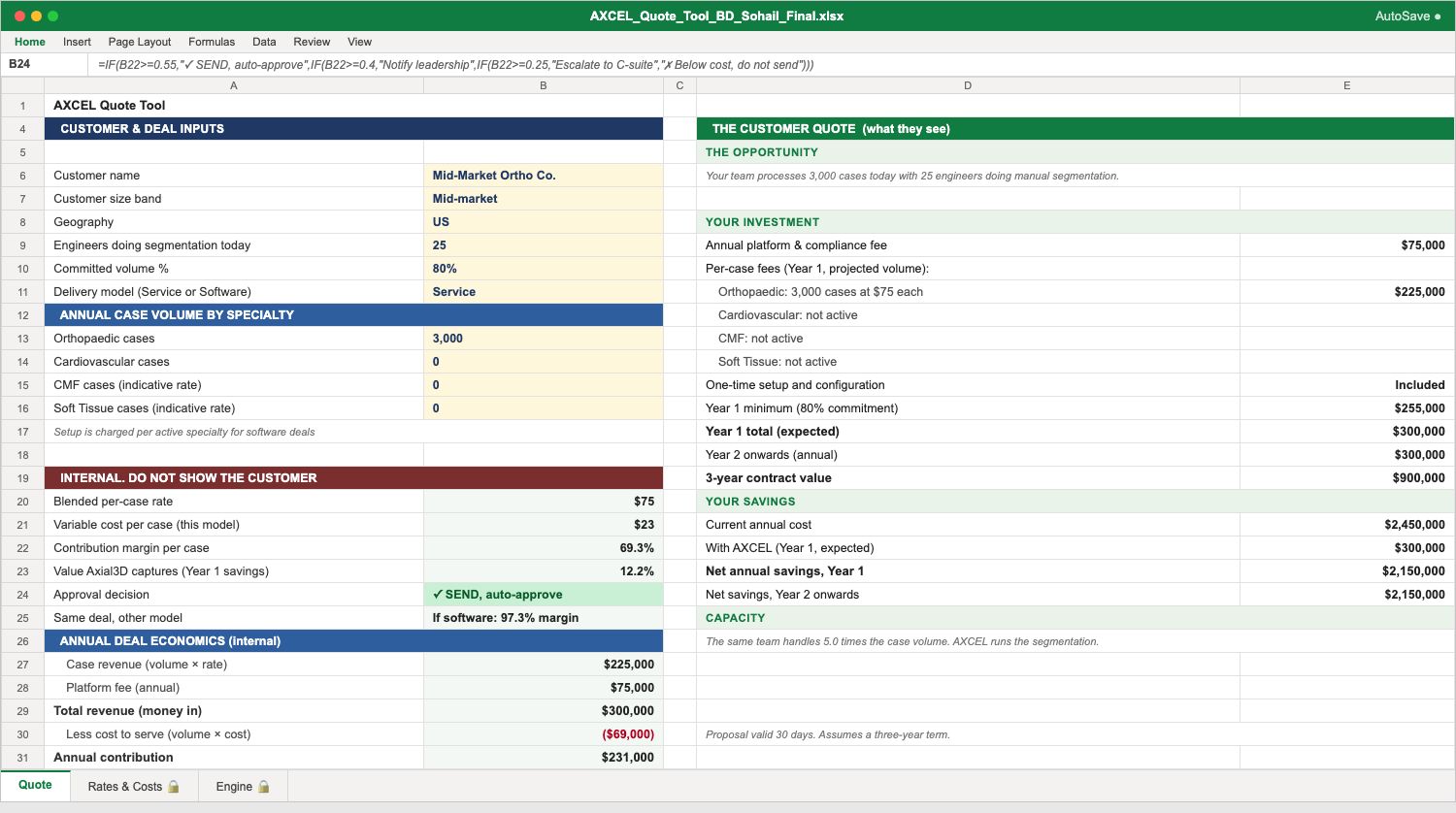
- Built a quoting tool so a sales rep can price a deal from five to seven inputs, with a one-page proposal and warning flags.
- Built an 11-tab margin tool so the CFO can see cost per case, margin by deal, the effect of cost changes and what discounts really cost.
What the numbers showed
- A 10% discount wipes out about 80% of the profit on a deal.
- A mid-size cardiac deal earns an 82% margin; the biggest ortho deal earns 18%, and 4% if cloud costs triple.
- Axial3D’s largest customer gets an estimated $7.1M of value and pays $720K, about 10%.
- Run live, a mid-market ortho deal quotes at $300K and auto-approves at a 69% margin in under a minute.
What still needs checking
The per-case prices and the $25-a-case cost floor rest on benchmarks and cloud estimates. The next step is to test them against Axial3D’s own won and lost deals and real cost data.